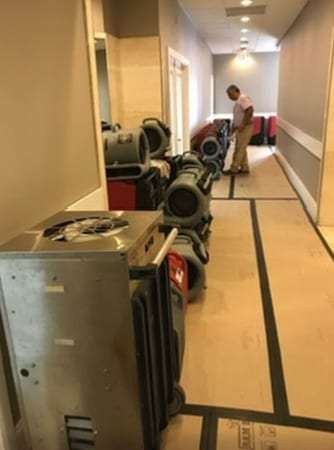
Hotel corridor with dehumidifiers and air movers. Used to illustrate this step; it is not a photo of a job connected to this site.
A corridor is the shared lung of a hotel floor. Air moves under room doors, through return paths and along stairwells, and any room with a strong smell can push that smell into the hall. Housekeeping carts, room service trays, ice machine areas and trash chutes add their own smells. When the corridor smells, the instinct is to blame one thing, but the cause can be several.
Downtown towers add complexity. Elevators can pull air up and down the building, and the lobby on each floor may be a pressure boundary where smells escape. Engineering and housekeeping should share a floor plan marked with where smells appear so patterns are easy to see.
Time of day changes what you smell. Mid-morning, when carts are out and rooms are being cleaned, corridors carry cleaning product and laundry smells that fade by afternoon. Late evening can bring food odors from room service trays left outside doors. A smell that is present at every hour is more likely a room or an air path issue than a passing activity. Note the time of each observation so you can tell the difference, and ask night staff to record what they notice since they see the building under different airflow conditions than the day shift.
Tracing a corridor smell
- Walk the floor early.Do it before heavy foot traffic, with a second person if possible.
- Smell at each door.Notice whether the smell is stronger at a particular room.
- Check carts and trash areas.Look at carts, linen chutes and service rooms.
- Check vents and returns.See whether a supply or return is carrying the smell.
- Record the pattern.Write down where it is strongest and when it began.
- Decide on action.Isolate the source room, adjust the air path or clean the area.
Source in a room versus source in the corridor
Likely a room
- Smell strongest at one door
- Smell changes when that door opens
- Housekeeping reports smoke or food
- Fades once the door is closed
Likely the corridor or air path
- Smell at several doors
- Smell near elevators or stairwells
- Strong at vents or returns
- Changes with building air pressure
Common questions
Can a door sweep help?
A good door seal may reduce smell moving into the hall. Engineering can check seals when a room is out of order.
Should the whole corridor be treated?
Only if it is a source. Usually treating the room or the air path is more effective.
General information for Downtown Denver, not a quote or professional advice. In an emergency, call 911.