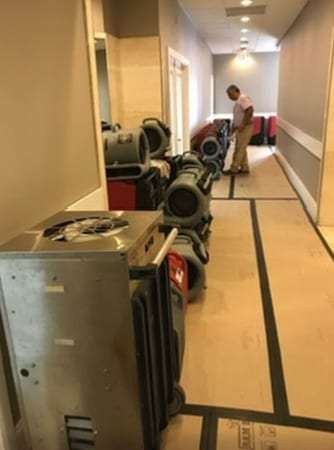
Hotel corridor with dehumidifiers and air movers. This photo illustrates the topic and is not from any address mentioned on this page.
Hotels in mixed-use areas may notice smells from adjacent businesses, from street activity or from busy lobbies. Building age may also affect ventilation and moisture behavior. No statement here is about any real building near the station or about how any local venue operates.
Planning starts with inspection habits. Smell the entrance, the lobby, the corridors and a sample of rooms. If smell patterns link to a time of day, such as late evening, note it and discuss with engineering and security.
Guests arriving through busy lobbies may carry outside smells with them, and the first corridor smell can be a mixture of food, cleaning and people. Separate what belongs to the moment from what persists by returning to the same spot at a quieter time and smelling again. If the smell remains, it is more likely tied to the building or its materials. If it disappears, it was probably a passing event. Record the time of each observation and the conditions, such as doors open, a busy evening or a cleaning round, so patterns emerge without guesswork, and share those notes with the next shift in a brief handoff.
In mixed-use settings, smells from below or beside the hotel can enter through shared walls, ducts or doors. If a smell appears at the same time every day, ask engineering to look at nearby air intakes and exhaust points, and talk with building management about whether neighbors might be involved. Keep a dated log of each observation so that conversation rests on specific, recorded details.
Training new staff on the smell scale during their first week gives the team a shared language from the start. Pair each new person with an experienced inspector for a few rooms, let them compare ratings, and talk through any differences; that short exercise does more than a written policy to make reports consistent across shifts and days.
A weekly rhythm
- Monday
- Review the weekend's complaint log
- Midweek
- Spot-check rooms and corridors
- Friday
- Check readiness for the weekend
- Weekend
- Log complaints promptly
- Sunday
- Hold rooms that need follow-up
Prompts
- Check lobby and entrance air
- Note whether outdoor smell enters through doors
- Inspect corridors after busy evenings
- Check older building ventilation with engineering
- Record any pattern by time of day
- Keep a buffer room for moves
Common questions
Do older buildings smell more?
Not necessarily. Age can influence ventilation and moisture, so it is worth checking each building's systems rather than assuming.
Is nightlife a factor?
It may affect guest patterns and complaints, but that varies.
General information for Downtown Denver, not a quote or professional advice. In an emergency, call 911.