In tall buildings, air may move between floors through shafts, risers and corridors. A smell reported in one room may be related to another place. Details about any one tower, its shafts or its air systems are not covered here and should come from the building's own engineers.
Starting with a map of complaints, even a simple list of rooms and floors, can help spot clusters. If a clear pattern appears, engineering can decide where to look first, whether at air units, drains or shared areas.
Another useful habit is to keep a floor-by-floor summary of what has been done. If an air unit was cleaned on the ninth floor and a drain was checked on the twelfth, a single sheet showing both lets engineering see whether complaints fall afterward. Where several floors are involved, avoid fixing everything at once, because then it is hard to tell which step helped. Change one thing at a time where the schedule allows, recheck and record. When the pattern points beyond the building's own systems, such as a smell that seems to enter from outside, involve the property's management and any building contacts before taking larger steps.
If two rooms on the same vertical line report a similar smell, mark them on a simple floor diagram. Seeing the line makes the question of shared drains or risers concrete. A tower's maintenance team may already hold drawings that show which rooms share a stack, which saves guessing. Pair that with the complaint dates, and the sequence of reports may suggest whether a problem is spreading or has a fixed origin.
Keep expectations modest: tracing a smell through a tall building can take several visits, and an early guess may turn out wrong. Writing down each theory and what was learned from testing it prevents the team from repeating the same check twice.
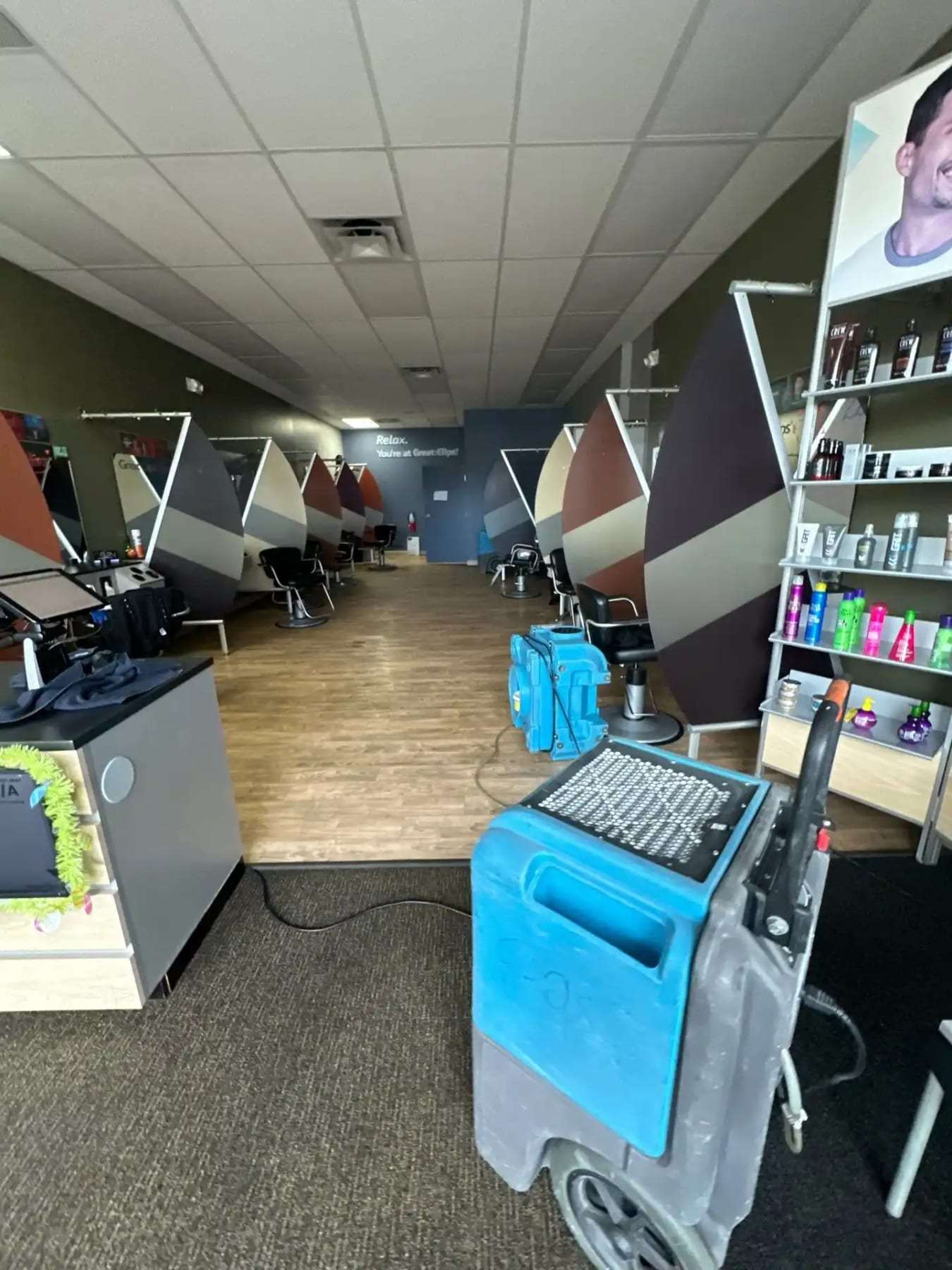
Dehumidifier running in a salon with the chairs pushed aside. Illustrative only: this photo is not from a job tied to this site or a specific address.
Single room versus pattern
Single room clues
- Smell present only in one room
- Soft goods are suspect
- Unit and drains seem normal
- Smell changes after cleaning
Pattern clues
- Several rooms on the same side or line
- Smell when air units start
- Smell in corridors
- Complaints after weather or event changes
Tower checks
- Log rooms and floors with reports
- Compare rooms along the same vertical line
- Check units and drains in the cluster
- Inspect corridors and elevator lobbies
- Recheck after service
- Share findings with housekeeping
Reminder
- Scope
- Starting checklist for engineering
- Local facts
- Check your own building plans
- Engineering
- Leads on air path questions
- Records
- Keep notes by room and floor
Common questions
Why might smell travel in a tall hotel?
Shared air paths, doors and pressure differences may play a role, though each building differs.
Who should investigate?
Engineering, with support from housekeeping.
General information for Downtown Denver, not a quote or professional advice. In an emergency, call 911.