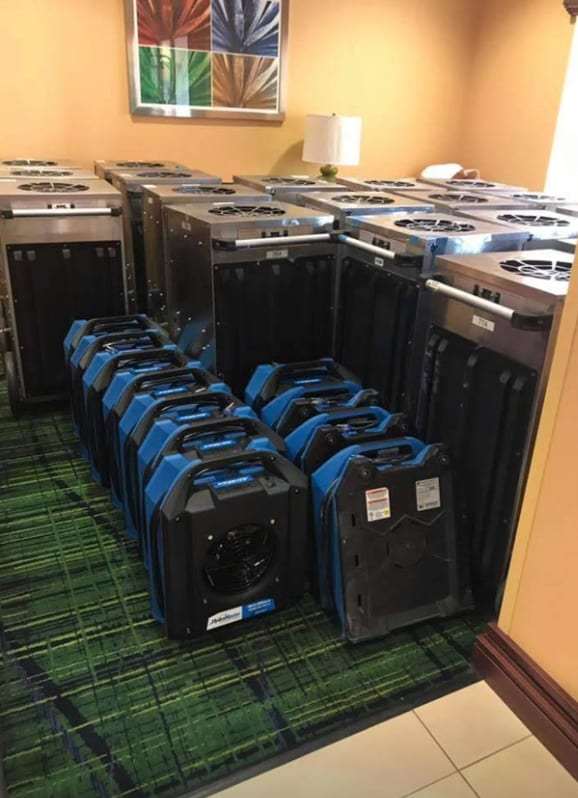
Room filled with dehumidifiers and air movers on patterned carpet. Used to illustrate this step; it is not a photo of a job connected to this site.
This is a hypothetical scenario written to illustrate how reasoning might go. It does not describe a real hotel, guest or actual job, and every detail is invented. No real property, room or guest is described here.
The illustrative situation
Illustrative example. Not a real job or customer.
A king room in a downtown hotel is reported by housekeeping for a strong smoke smell after a weekend stay. The hotel expects another busy weekend and wants to know whether the room can be returned to service.
- The inspector rates the smell as strong and notes it is strongest at the headboard and drapes.
- Linens, towels and the mattress protector are laundered.
- Hard surfaces and the bathroom are wiped, and the room is aired.
- The carpet is extracted and left to dry fully.
- On recheck, the smell is faint in the room but still clear in the drapes.
- Drapery panels are replaced and the room is rechecked once more.
In this invented example, the room is held for part of a week and released after the drapes were replaced and a second check showed the room acceptable.
Decision points in the example
- Rate the smell on entry and record it
- Check the bed system and drapes separately
- Clean hard surfaces and launder soft goods
- Dry the carpet fully before rechecking
- Decide on replacement if the smell remains
- Record who approved the release
What the example shows
- Source hunting
- The drapes held what cleaning of the room had not reached
- Timing
- Recheck after drying
- Replacement
- A small item was cheaper than repeated treatment
- Records
- Notes helped the next shift
The example illustrates that smoke smell in one room is usually spread across several items. Fixing one item rarely clears the room. Instead, a sequence works: remove, clean, dry, recheck, replace where needed and recheck again.
A property in a busy downtown area may feel strong pressure to turn the room quickly. Holding a room is a cost, but releasing a room that still smells is a cost too, and the second cost often arrives as a guest complaint at a bad moment. A fair view of both costs, written down, leads to better decisions.
None of this is a promise of any outcome. Real rooms vary by materials, by how long smoking occurred and by building ventilation.
Common questions
Does LoDo mean anything special in the example?
It only sets the scene. The example makes no claims about any area.
Would drapes always be the issue?
No. It is an invented example.
General information for Downtown Denver, not a quote or professional advice. In an emergency, call 911.